Total Wine & More
- 4.6
- Rating
- 1.00M
- Installs
- Free
- Price

 Analysis by App-foxy
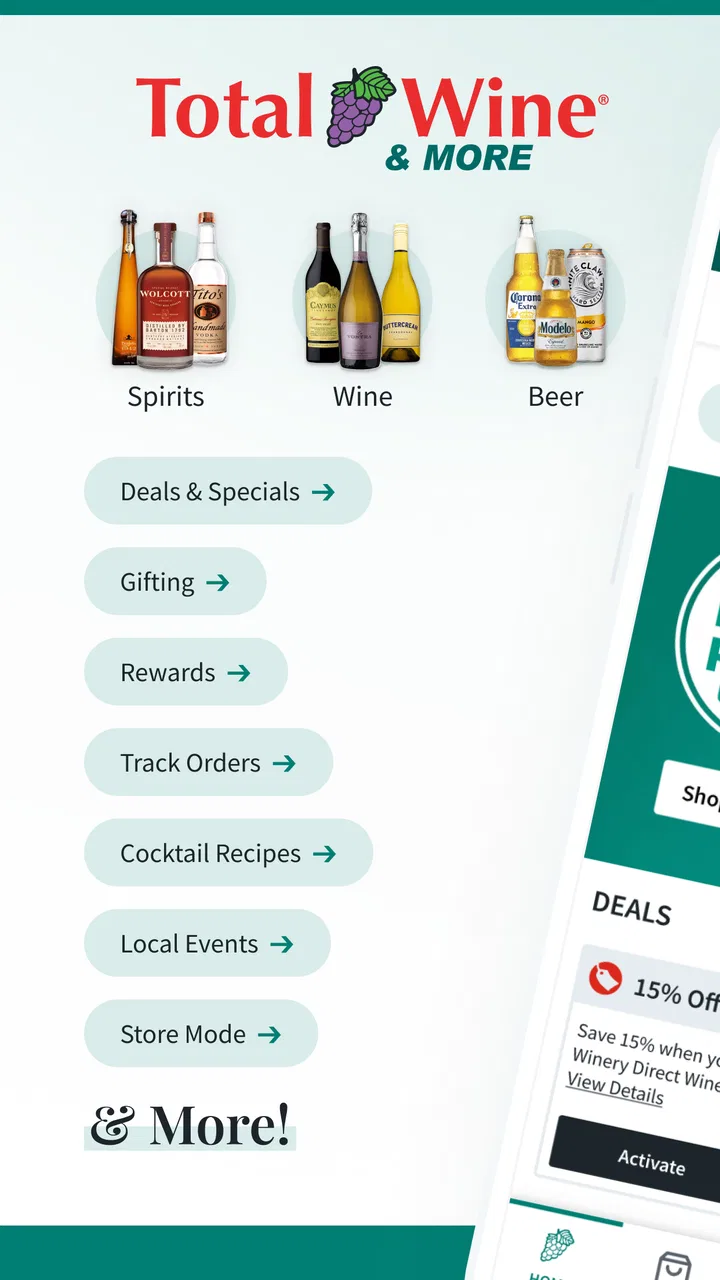
I found Total Wine & More most useful when I treated it as a shopping companion rather than a replacement for walking through a store. The app brings wines, spirits, beers, and other drinks into one searchable place, which makes it easier to narrow down a purchase before I leave home. It is a free Food & Drink app from Total Wine & More, and its mature age rating is an important part of understanding where it fits: this is built for adults planning alcohol purchases, not for casual browsing by children or younger household members.
My first impression was practical rather than flashy. The main value is convenience. Instead of trying to remember a bottle name, comparing shelves from memory, or opening several unrelated shopping pages, I can use one app to explore the retailer’s selection. That matters most when I already have a rough idea of what I need but not the exact product. I can begin with a type of drink, investigate alternatives, and make a more deliberate choice before committing to a trip.
How it works in a shared household
A realistic use case is a household preparing for a dinner, birthday gathering, or weekend visit from friends. One person may be responsible for food while another handles drinks. In that situation, I can browse the app separately, send the product name or details through the household’s usual messaging method, and let the other person confirm whether it suits the plan. The app helps with the research stage, but it does not remove the need for a conversation about taste, quantity, budget, or who is actually making the purchase.
You May Also Like

 Blood Strike: 2.5 Anniversary
Blood Strike’s Loadouts Turn Every Drop Into a Tactical Gamble
A close look at Blood Strike’s custom loadouts: how fast access to signature weapons reshapes its battle royale rhythm, rewards preparation, and narrows the gap between fights.

 Pandora - Music & Podcasts
Pandora’s Music Is Easy to Start, but Harder to Recover
Pandora’s strength is its low-effort path from a seed to a station. Its weak spot is how much confidence it asks you to place in connection, setup, and quiet recovery.

 8 Ball Pool
 Is Built on Rivalries, Rematches, and Routine
A close look at the rivalries, rematches, shared routines, and unanswered safety questions that turn a quick pool match into a persistent mobile community.

 Samsung Music
’s Quiet Strength Is Playing What You Already Own
Its reach comes less from spectacle than from dependable access to a personal library. That simplicity is both the app’s strongest retention engine and its ceiling.

 AccuWeather: Weather Radar
AccuWeather Review: A Quick, Clear Forecast for Everyday Decisions
For everyday plans, the best forecast is the one you can understand quickly. AccuWeather makes rain timing, radar, and local conditions easy to act on, with a few trade-offs.

 Hill Climb Racing
Why Hill Climb Racing Still Turns Crashes Into One More Run
A tiny car, a bumpy hill and one more upgrade: Hill Climb Racing keeps resurfacing because its simple chaos makes every near-miss feel personal.
More From Our News Desk
View All News


That distinction is useful on a shared device. If several adults use the same phone or tablet, I would avoid assuming that the app represents one person’s permanent preferences or shopping history. A shared device can make browsing convenient, but it also creates a boundary between looking at products and placing an order or completing a store visit. I recommend that the person responsible for the purchase review the final selection themselves rather than relying on a quick handoff.
I also found that the app is better for coordination when the request is specific. “Find something for dinner” leaves too much room for disagreement. A clearer request might include the meal, preferred drink type, a spending limit, and whether the group wants something familiar or adventurous. The app can support that comparison, but it cannot decide which household member’s preference should win. Used this way, it becomes a shared planning tool instead of a source of accidental duplicate purchases.
Setting sensible boundaries before browsing
Because this is an alcohol-focused shopping app, I would establish simple boundaries before handing a shared phone to someone else. Adults can use it to compare products, but younger household members should not be encouraged to browse it as entertainment. The mature rating is not a minor detail; it signals that the subject matter needs adult context. On a family device, I would keep the app associated with the adult who manages drink purchases and avoid treating it like a general-purpose grocery catalog.
There is also a useful separation between research and responsibility. Someone can help identify a bottle for a meal without being the person who buys or consumes it. In a household with teenagers, for example, I would handle the search myself and explain only the relevant decision, such as choosing a style that matches dinner. I would not use the app as a way to introduce alcohol shopping casually or leave it open for unsupervised browsing.
The app is free to install, which removes a financial barrier to trying it, but that does not mean the shopping process itself is cost-free. The real spending decision happens after browsing, and the convenience of seeing many choices can make it easy to add more than originally planned. I found it helpful to decide on a budget and a purpose before opening the catalog. Otherwise, an attractive alternative can turn a simple purchase into an unplanned exploration.
Another boundary concerns expectations. I would not assume that finding a product in the app automatically settles every practical detail about buying it. Before making a trip, I would check the current product information and confirm the purchase plan at the appropriate point in the retailer’s process. That small pause prevents the common mistake of treating a browsing result as the final word when the household really needs a dependable, ready-to-buy choice.
Using the catalog to coordinate a real purchase
The strongest workflow for me begins with a short list. I first decide what the occasion requires, then use the app to explore suitable categories rather than scrolling without a plan. For a dinner, I might compare a familiar bottle with a less obvious alternative, keeping the meal and the guests in mind. For a gathering, I would separate the list into essentials and optional extras. This makes the app’s broad selection easier to manage.
A useful, less obvious habit is to record the reasoning behind a choice, not just its name. If I send another adult a product suggestion, I include why it made the shortlist: it fits the meal, matches a preference, or offers a different style from the other options. That reduces back-and-forth messages and helps the buyer understand whether the selection is intentional. The app supplies the catalog; the household supplies the context.
I would also avoid making one person browse while another person makes decisions from incomplete information. If the app is being used on a shared device, it is better to pause and review the complete shortlist together. This is especially important when two adults have different expectations about the same occasion. A product chosen for a quiet meal may not be suitable for a large gathering, and the app cannot infer that difference from a search alone.
For repeat shopping, I find a simple note outside the app can be surprisingly useful. Writing down what the household liked, what was too strong, or what worked with a particular meal gives future browsing a starting point. It also prevents the app from becoming a cycle of random discovery. I would use Total Wine & More to investigate the available choices, then rely on my own household notes to make the next decision faster.
There is a trade-off here. A specialist retailer’s catalog can feel more focused than a general grocery app, but the range can also make the decision harder for someone who does not know the terminology. If you already have a favorite producer or drink style, that breadth is helpful. If you want the quickest possible answer with no comparison, a local store visit or a trusted recommendation may be less effort.
Account boundaries and trust between adults
Shared use becomes more complicated when different adults have different shopping habits. I would not assume that one person’s account, saved details, or browsing activity should be available to everyone who picks up the device. The safest approach is to let the person responsible for the purchase control the final review and any checkout-related step. Other household members can contribute suggestions without needing access to every part of the shopping process.
This is not about making the app difficult to use. It is about avoiding confusion. A shared phone can contain several people’s messages, shopping plans, and personal information. If one adult searches for a product and another later continues the process, they may misunderstand which items were tentative and which were approved. I prefer a clear handoff: the researcher sends a short shortlist, and the buyer checks it before acting.
That workflow is particularly valuable when a household is planning an event under time pressure. I might browse in the morning, compare a few options, and send the final suggestions to the person stopping at the store. If plans change, the buyer can make the final call rather than assuming that an earlier search is still appropriate. The app supports this kind of coordination, but the household needs to define who has the last word.
I would also be careful with notifications and open screens on a shared device. Even without inventing special privacy controls, ordinary device habits help: lock the phone when finished, avoid leaving a purchase screen visible, and use the household’s normal rules for shared accounts. These are simple precautions, but they matter more here because the app concerns mature products and potentially sensitive purchasing choices.
Age context matters more than convenience
The mature rating makes Total Wine & More a poor fit for a child’s independent device use. I would recommend it to adults who are legally and personally responsible for alcohol purchases, not to families seeking a general food-planning app for everyone. A parent may use the app while planning a meal, but that does not mean every member of the household should have equal access to the catalog or the purchase process.
Trust also depends on the situation. In an adult shared home, several people may browse together and compare preferences openly. In a home with minors, I would keep the adult role clear and avoid turning the app into a group activity. The difference is not whether the interface is easy to navigate; it is whether the surrounding household rules make the use appropriate.
For adults who are new to wine or spirits, the app can be a useful starting point because it gives them a place to compare choices before entering a store. Still, I would not confuse product browsing with expert guidance. A catalog can help organize options, but it cannot taste a bottle, understand a guest’s sensitivity, or guarantee that a bold choice will suit everyone. When the occasion is important, advice from a knowledgeable store employee may be better than making a decision from a screen alone.
This is also where the mature audience affects the app’s usefulness. An adult who wants to learn gradually can take time to compare categories and build personal preferences. Someone looking for a quick, non-alcoholic meal-planning tool should skip it because the app’s purpose is too specialized. Likewise, households that rarely buy drinks may find a standard grocery app more convenient for their broader shopping list.
What the app does well, and where it slows me down
Total Wine & More’s clearest strength is concentration. I can investigate multiple drink categories without switching between unrelated retailer apps. That is valuable when I am planning a menu and want the drink choice to feel connected to the occasion. The app also makes advance research more comfortable than trying to decide in a crowded aisle while other people wait.
Its broad selection is both an advantage and a responsibility. More choice gives experienced shoppers room to compare styles, but it can overwhelm someone who does not know what separates one option from another. I recommend entering with a narrow question, such as “What can suit this meal?” rather than “What should I buy?” The narrower question produces a more manageable search and makes household discussion easier.
The main friction is that convenience can encourage overconfidence. Seeing a product in an app may feel like enough research, even though the final decision still depends on the occasion, the people drinking, and the purchase details. I would use the app to create a shortlist, not to outsource judgment. That is especially important when buying for guests whose preferences I do not know well.
Another limitation is that the app is not the best answer for every shopping style. If I already know exactly what I want and am near a store, walking in may be faster. If I need a complete grocery order, a general supermarket app may keep the whole list in one place. Total Wine & More makes the most sense when drink selection is the part of the plan that needs attention.
The app has matured over time, having first appeared on January 8, 2018, and the current release is version 10.6.1. It supports devices running Android 7.0 or later, which makes it accessible to many older Android phones, although the actual experience will still depend on the device and operating system. Its scale is also notable: it has passed one million installs, with an average rating of 4.6 from around twenty-two thousand ratings and roughly 9,700 written reviews. Those figures suggest a well-established app, but they do not replace checking whether its shopping approach suits you.
Who should use it and who should choose something else
I would recommend the app to an adult who regularly buys wine, beer, or spirits from Total Wine & More and wants to research before shopping. It is especially useful for someone who dislikes making a rushed decision in-store, coordinates purchases with another adult, or enjoys comparing possibilities for meals and gatherings. The free download makes it easy to test without committing money to the app itself.
I would be more cautious recommending it to a beginner who wants a single obvious answer. The catalog can help that person explore, but it may create more questions than it resolves. A trusted friend, a store specialist, or a simpler shopping routine may be better when the goal is confidence rather than range.
I would also skip it for children, for shared family browsing without adult supervision, and for anyone seeking a general household grocery manager. Its mature focus is central to the experience. Even in an adult home, I would not install it on a device where the app’s subject matter conflicts with the household’s rules.
For shared adult use, my preferred method is straightforward: one person defines the occasion and budget, another can suggest options, and the buyer confirms the final list. That division keeps the app useful without pretending it can manage household trust, age boundaries, or personal responsibility. It also reduces duplicate purchases and prevents a casual search from becoming an accidental commitment.
My household verdict
After using Total Wine & More as a planning tool, I see its best role clearly. It helps adults turn a vague drink-shopping task into a more organized comparison, especially when several people need to agree on what to buy. The app is not a substitute for judgment, responsible purchasing, or a conversation about who is using the shared device, but it can make those conversations more concrete.
I like it most for deliberate shopping: a dinner where the drink should complement the food, a gathering where the list needs structure, or a household where one adult researches and another completes the purchase. I like it less for impulse browsing, children’s devices, or situations where a general grocery app would handle the entire trip more efficiently.
My recommendation is simple: use it as an adult research and coordination tool, not as an unsupervised family catalog. If that boundary fits your household, the app’s focused selection and free access make it worth trying. If your priority is a quick, universal shopping list for everyone at home, another category of app will probably serve you better.
FAQs for Total Wine & More
01What is the Total Wine & More app used for?
The Total Wine & More app is designed to make shopping for wine, beer, and spirits more convenient. After browsing the catalog, users can search by brand, type, price, rating, or occasion, view product details, check availability at nearby stores, and place eligible orders for pickup or delivery. Features may vary depending on your location and local regulations.
02Can I order alcohol for delivery or store pickup through the app?
In supported areas, the app allows customers to purchase eligible products for same-day delivery or store pickup. Availability depends on local laws, inventory, delivery coverage, and store operating hours. Orders containing alcohol generally require the recipient to meet the legal drinking age and present a valid government-issued photo ID when the order is collected or delivered.
03Does the Total Wine & More app show accurate store inventory?
The app provides availability information for selected Total Wine & More locations, which is helpful when planning a purchase. However, inventory can change quickly, especially for popular or limited products, so an item shown as available may sell out before your order is completed. It is best to confirm the selected store and review substitutions or pickup instructions carefully.
04Do I need an account to use the Total Wine & More app?
You may be able to browse products, stores, and general information without creating an account, but an account is typically needed for features such as saving favorites, tracking orders, managing addresses, and completing certain purchases. Registration usually requires basic contact information. Before downloading, users should also review the app’s privacy policy and notification settings.
05Is the Total Wine & More app available everywhere, and are there age restrictions?
The app may be downloadable in many regions, but its shopping, delivery, and pickup features are primarily intended for customers served by participating Total Wine & More stores in the United States. Alcohol purchases are restricted by applicable laws, and users must meet the legal drinking age in their jurisdiction. Location permissions may be requested to show nearby stores and services.
Pros
- Extensive selection of wine
- beer
- and spirits in one place.
- Useful filters make browsing by type
- price
- and region easier.
- Product pages often include ratings
- tasting notes
- and pairing ideas.
- Store pickup can save time when items are available locally.
- Regular promotions and loyalty benefits may reduce purchase costs.
Cons
- Inventory and prices can vary significantly between nearby stores.
- Some products may be unavailable for pickup despite appearing online.
- Age verification is required before completing purchases.
- Delivery availability and fees depend on location and order size.
- The large catalog can feel overwhelming for first-time shoppers.

Total Wine & More
Gallery